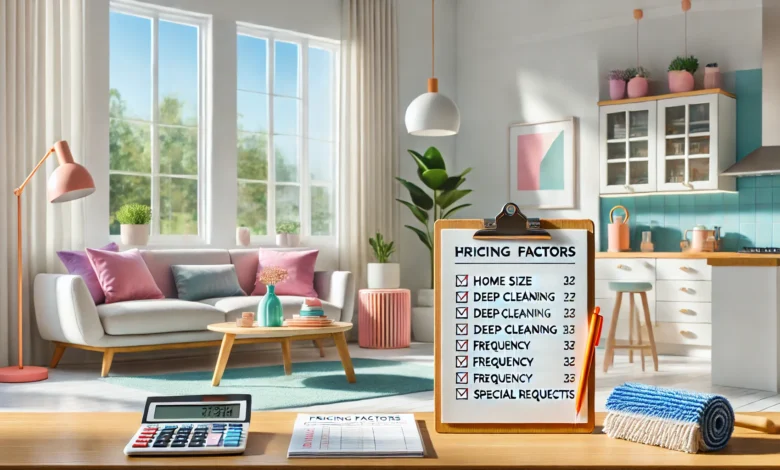
What factors increase home cleaning prices is a question many homeowners ask after receiving quotes that vary widely from one cleaning service to another. While it may seem like cleaning should cost roughly the same everywhere, the reality is that professional home cleaning prices are influenced by many variables. From the size and condition of your home to the type of service requested and even your location, each factor plays a role in determining the final cost. Understanding these factors helps you set realistic expectations, compare quotes fairly, and make smarter decisions when hiring a cleaning service.
Why Home Cleaning Prices Are Not One-Size-Fits-All
Home cleaning is a labor-based service, which means pricing is closely tied to time, effort, and risk. No two homes are exactly the same, and no two cleaning jobs require the same level of work.
A small, well-maintained apartment cleaned weekly will cost far less than a large, cluttered house that hasn’t been professionally cleaned in months. Cleaning companies price their services to reflect the actual resources required to complete the job properly.
Because of this, understanding what increases cleaning prices allows you to see where costs come from rather than assuming higher prices are arbitrary.
Home Size and Square Footage
One of the most significant factors affecting cleaning prices is the size of the home. Larger homes take more time to clean, require more supplies, and often involve multiple cleaners.
Many companies use square footage as a baseline for pricing. A 3,000-square-foot home will almost always cost more than a 1,200-square-foot home, even if both are in good condition.
More rooms also mean more surfaces, floors, bathrooms, and fixtures that need attention, which naturally increases labor costs.
Number of Bathrooms and Kitchens
Bathrooms and kitchens are the most time-consuming rooms to clean. They require sanitizing, scrubbing, and detailed attention to fixtures, tile, and surfaces.
A home with one bathroom is significantly cheaper to clean than a home with three or four bathrooms. Each additional bathroom adds time and complexity to the job.
Similarly, homes with multiple kitchens, wet bars, or kitchenette areas often see higher cleaning costs.
Type of Cleaning Service Requested
The type of cleaning you choose has a major impact on price.
Standard cleaning focuses on routine maintenance such as dusting, vacuuming, mopping, and basic bathroom and kitchen cleaning.
Deep cleaning involves more intensive tasks like scrubbing baseboards, cleaning grout, removing buildup, and detailed sanitation. This level of service takes significantly longer and costs more.
Move-in and move-out cleaning is often even more expensive because it requires cleaning inside cabinets, appliances, closets, and other areas typically skipped during regular cleaning.
Condition of the Home
The current condition of your home plays a huge role in pricing. A home that is regularly cleaned is much easier and faster to maintain.
If a home hasn’t been cleaned professionally in a long time, cleaners may need extra time to remove grease, soap scum, dust buildup, and stains.
Heavy dirt, mold, mildew, or neglected areas almost always increase the price because they require additional labor and stronger cleaning solutions.
Level of Clutter and Organization
Clutter slows down the cleaning process. When surfaces are covered with personal items, cleaners must spend time moving objects before they can clean.
Many cleaning services do not include organizing as part of standard cleaning. If a cleaner must sort, stack, or work around clutter, the job takes longer.
Highly cluttered homes may be charged higher rates or require specialized cleaning services.
Frequency of Cleaning
How often you schedule cleaning services directly affects pricing.
Weekly or biweekly cleaning is usually cheaper per visit because the home stays in good condition and requires less effort each time.
One-time or infrequent cleanings often cost more because there is more buildup to address.
Many cleaning companies offer discounted rates for recurring services due to predictable scheduling and reduced labor per visit.
Special Requests and Add-On Services
Additional services almost always increase the total price.
Common add-ons include cleaning inside ovens and refrigerators, interior window cleaning, carpet shampooing, laundry, bed changing, and inside cabinets.
These tasks are not part of basic cleaning packages and require extra time, tools, or expertise.
Special materials, such as marble, natural stone, or delicate wood surfaces, may also increase costs because they require specific products and techniques.
Pets in the Home
Homes with pets often cost more to clean, especially if there is significant pet hair, dander, or odor.
Pet hair embedded in carpets, furniture, and corners takes extra time to remove.
Some pets also increase allergen levels, requiring more detailed vacuuming and filtration.
While most cleaners are happy to work in pet-friendly homes, heavy pet-related cleaning can raise prices.
Geographic Location
Location is a major pricing factor in home cleaning services.
Cleaning costs are typically higher in large cities and metropolitan areas where labor, insurance, and operating expenses are higher.
In smaller towns or rural areas, cleaning services may be less expensive, though availability may be more limited.
Even within the same city, prices can vary by neighborhood based on demand and travel distance.
Travel Time and Accessibility
If your home is far from a cleaning company’s base or difficult to access, prices may increase.
Long travel times, limited parking, gated communities, or high-rise buildings with slow access can add time to each job.
Some companies include travel costs in their pricing, while others may add a fee for distant locations.
Number of Cleaners Required
Larger or more complex homes often require multiple cleaners to complete the job efficiently.
While having more cleaners can reduce the total time spent on-site, it increases labor costs.
This is especially common for deep cleaning, move-out cleaning, or large family homes.
Use of Eco-Friendly or Specialty Products
Eco-friendly or non-toxic cleaning products may increase costs.
These products are often more expensive than standard cleaning solutions and may require additional effort to achieve the same results.
Clients who request green cleaning should expect slightly higher prices in many cases.
Insurance, Licensing, and Professional Standards
Professional cleaning companies that carry insurance, pay taxes, train employees, and follow labor laws typically charge more than informal or uninsured cleaners.
These higher prices reflect safer, more reliable service and reduced risk for homeowners.
While cheaper options exist, they often come with fewer protections if something goes wrong.
Time Constraints and Urgency
Urgent or last-minute cleaning requests often cost more.
Same-day or next-day bookings may require schedule changes, overtime pay, or additional staffing.
Move-out deadlines and emergency cleanups are common examples of higher-priced services.
Pros and Cons of Higher Cleaning Prices
Higher prices often reflect more thorough cleaning, trained staff, insurance coverage, and reliable service.
The downside is affordability, especially for one-time or deep cleaning services.
However, higher-quality cleaning can save time, reduce stress, and prevent costly damage or disputes.
How to Control or Reduce Cleaning Costs
Declutter your home before cleaning appointments.
Schedule regular cleanings instead of one-time visits.
Limit add-on services to what you truly need.
Ask for clear pricing breakdowns so you understand where costs come from.
Frequently Asked Questions
Why did my cleaning quote increase compared to last time?
Changes in home condition, added services, inflation, or increased labor costs can all affect pricing.
Is it cheaper to clean smaller rooms myself?
Yes. Some homeowners reduce costs by handling light cleaning between professional visits.
Do all cleaners charge the same for deep cleaning?
No. Deep cleaning prices vary based on scope, home size, and company standards.
Is higher-priced cleaning always better?
Not always, but higher prices often reflect professionalism, insurance, and consistency.
Conclusion
Home cleaning prices increase for many valid reasons, including home size, service type, condition, frequency, location, and special requests. Understanding these factors helps explain why quotes can vary so much and why professional cleaning is priced the way it is.
By knowing what drives cleaning costs higher, homeowners can make informed choices, avoid surprises, and decide where to invest for the best value.
Ultimately, a fair cleaning price reflects the time, effort, and responsibility involved in keeping your home clean, safe, and comfortable.