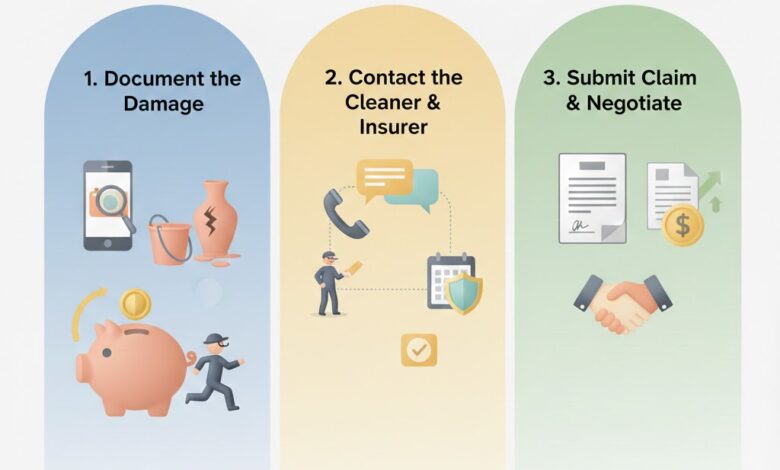
How to file an insurance claim against a cleaner is something most homeowners hope they never need to learn, but accidents do happen. A cleaner may accidentally break an item, damage flooring, or cause another type of loss while working in your home. Knowing the correct steps to file an insurance claim can save you time, reduce stress, and increase the chances of being properly compensated. This guide explains the process clearly, what to expect, and how to protect yourself before and after a claim.
When You Can File an Insurance Claim Against a Cleaner
You can typically file an insurance claim when a cleaner causes accidental damage to your property or when someone is injured during the cleaning service.
Common situations include broken furniture or decor, scratched floors, damaged countertops, water damage caused during cleaning, or personal injury involving the cleaner.
Insurance claims apply when the cleaner or cleaning company carries liability insurance or workers’ compensation insurance, depending on the situation.
Understand What Type of Insurance Applies
Before filing a claim, it’s important to know which type of insurance is relevant.
General liability insurance covers accidental damage to your property caused by the cleaner.
Workers’ compensation insurance applies if the cleaner is injured while working in your home and is employed by a cleaning company.
Bonding is different from insurance and typically applies only to theft or dishonesty, not accidental damage.
Step One: Document the Damage Immediately
As soon as you notice damage, document everything.
Take clear photos and videos of the damage from multiple angles.
Record the date and time you discovered the issue and note which cleaner or team was present.
If possible, gather receipts, invoices, or proof of the item’s value.
Strong documentation is critical for a successful insurance claim.
Step Two: Notify the Cleaning Company Right Away
Contact the cleaning company or cleaner as soon as possible.
Explain what happened calmly and clearly, and provide basic details without making accusations.
Most professional cleaning companies require prompt notification to start the claims process.
Delaying notification may complicate or weaken your claim.
Step Three: Request Insurance Information
Ask the cleaning company for their insurance details.
This typically includes the insurance provider’s name, policy number, and type of coverage.
Reputable companies are usually transparent and cooperative when a legitimate claim arises.
If the cleaner is independent, confirm whether they carry personal liability insurance.
Step Four: File the Claim With the Insurance Provider
In some cases, the cleaning company will file the claim on your behalf.
In other situations, you may need to contact the insurance provider directly.
Provide all requested documentation, including photos, written descriptions, repair estimates, and proof of value.
Be honest and detailed in your statements, as inconsistencies can delay or deny claims.
Step Five: Obtain Repair or Replacement Estimates
Insurance companies often require repair or replacement estimates.
Get written estimates from licensed professionals when possible.
For damaged items, provide receipts or comparable replacement costs.
Do not repair or replace items until the insurer confirms approval unless instructed otherwise.
Step Six: Cooperate With the Investigation
The insurance company may conduct an investigation.
This can include reviewing documentation, speaking with the cleaner, or inspecting the damage.
Respond promptly to requests for information.
Most straightforward claims are resolved within a few weeks.
What If the Claim Is Denied?
Claims may be denied if the damage is excluded under the policy, lacks sufficient proof, or is considered normal wear and tear.
If your claim is denied, ask for a written explanation.
You may be able to appeal the decision by providing additional evidence.
If necessary, you can consult a legal professional to explore further options.
What If the Cleaner Is Not Insured?
If the cleaner is uninsured, filing an insurance claim may not be possible.
In this case, you may need to negotiate directly with the cleaner or cleaning company.
Small claims court may be an option for recovering damages, depending on the amount involved.
This situation highlights why hiring insured cleaners is so important.
How Long Does the Claims Process Take?
Simple claims with clear documentation may be resolved within one to three weeks.
More complex claims involving high-value items or disputes may take longer.
Staying responsive and organized helps speed up the process.
Pros and Cons of Filing an Insurance Claim
Filing a claim can help recover repair or replacement costs without personal expense.
It provides a formal, documented resolution process.
However, claims can take time and may strain the relationship with a cleaner.
For minor damage, some homeowners prefer direct resolution instead of formal claims.
How to Prevent Issues Before They Happen
Always hire cleaners who are insured and, ideally, bonded.
Ask for proof of insurance before service begins.
Remove or secure fragile or valuable items before cleaning appointments.
Use clear checklists and instructions to reduce misunderstandings.
Frequently Asked Questions
Can I file a claim for minor damage?
Yes, but small claims may not be worth the time compared to direct resolution.
Will filing a claim affect my own insurance?
Claims filed against the cleaner’s insurance generally do not affect your policy.
What if damage is discovered days later?
Report it as soon as you notice it, but delays may make claims harder to prove.
Does insurance cover sentimental value?
No, insurance typically covers repair or replacement value only.
Conclusion
Knowing how to file an insurance claim against a cleaner gives you peace of mind when hiring professional cleaning services. While most cleanings go smoothly, accidents can happen, and being prepared makes all the difference.
By documenting damage, notifying the cleaning company promptly, and working with the insurer, you can navigate the claims process effectively.
Ultimately, hiring insured professionals and understanding the claims process protects your home, your finances, and your confidence as a homeowner.